You can eat perfectly, exercise daily, and manage stress well — but if you’re not sleeping properly, none of it works as it should.
Sleep isn’t just rest. It’s when your brain consolidates memories, your body repairs tissue, your immune system strengthens, and your hormones reset. Yet according to the CDC, 1 in 3 adults doesn’t get enough quality sleep on a regular basis.
The good news? Sleep quality is highly responsive to changes in habits and environment. You don’t need expensive supplements or medication — you need the right strategy.
In this complete guide, you’ll learn:
- Why sleep quality matters more than sleep quantity
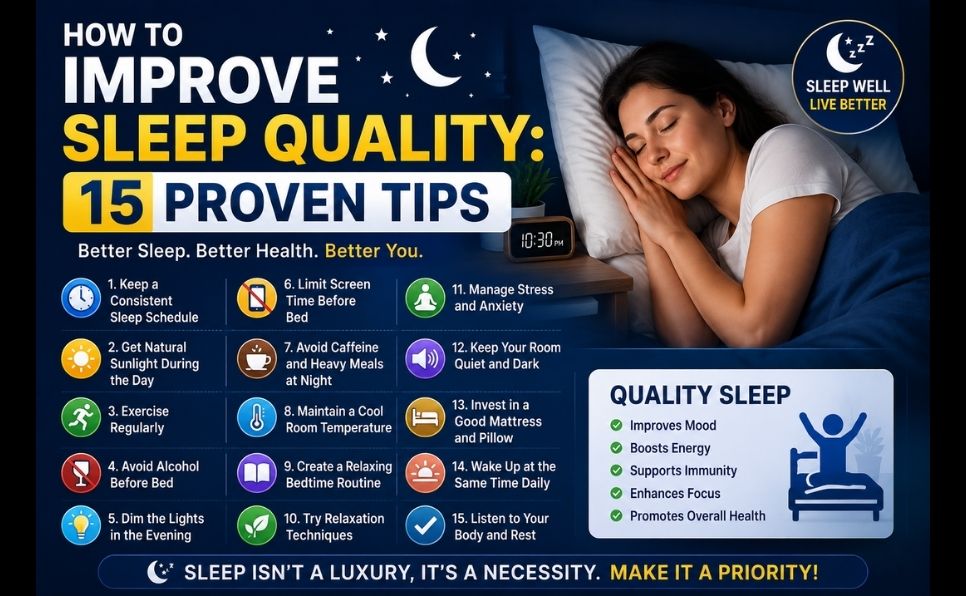
- 15 science-backed tips to fall asleep faster and sleep deeper
- What to avoid before bed
- How to fix your sleep environment
- When poor sleep might signal something more serious
Let’s get you sleeping better tonight. 👇
Why Sleep Quality Matters More Than Sleep Duration
Many people focus only on getting “8 hours” of sleep — but quality matters as much as quantity.
You can spend 8 hours in bed and still wake up exhausted if your sleep is fragmented, shallow, or interrupted. Quality sleep means moving properly through all sleep stages — including deep sleep and REM sleep — which is when the most important restorative processes happen.
The Sleep Cycle Explained
A full sleep cycle takes about 90 minutes and includes four stages, according to research from the Sleep Foundation:
| Stage | What Happens |
|---|---|
| Stage 1 (Light sleep) | Transition from wakefulness, easily disrupted |
| Stage 2 (Light sleep) | Heart rate slows, body temperature drops |
| Stage 3 (Deep sleep) | Tissue repair, immune system strengthening, growth hormone release |
| REM sleep | Memory consolidation, dreaming, brain processing |
You cycle through these stages 4–6 times per night. Poor sleep quality often means you’re not reaching enough deep sleep or REM sleep — even if you’re technically “asleep” for 8 hours.
💡 If you’re trying to understand other aspects of overall wellness, building healthy daily habits matters just as much as sleep itself.

15 Proven Tips to Improve Your Sleep Quality
1. Stick to a Consistent Sleep Schedule
Going to bed and waking up at the same time every day — even on weekends — is the single most powerful thing you can do for sleep quality.
Why it works: Your body has an internal clock called the circadian rhythm. When you maintain consistent sleep and wake times, your body learns to release sleep hormones (melatonin) and wake hormones (cortisol) at predictable times — making it easier to fall asleep and wake up naturally.
How to implement:
- Choose a bedtime and wake time you can maintain 7 days a week
- Allow yourself only 30–60 minutes of flexibility on weekends
- Be patient — it takes 2–3 weeks for your body to adjust to a new schedule
2. Get Morning Sunlight Exposure
Exposure to natural sunlight within 30–60 minutes of waking helps regulate your circadian rhythm and improves nighttime sleep quality.
Why it works: Sunlight exposure suppresses melatonin production during the day and helps set your internal clock — leading to natural melatonin release at the appropriate time in the evening.
How to implement:
- Step outside for 10–15 minutes within an hour of waking
- If sunlight isn’t available, consider a light therapy lamp (10,000 lux)
- Avoid sunglasses during this morning exposure window (unless medically necessary)
3. Limit Screen Time Before Bed
Blue light from phones, tablets, computers, and TVs suppresses melatonin production — making it harder to fall asleep.
Why it works: Blue light wavelengths (450-495nm) are particularly effective at signaling to your brain that it’s daytime, delaying the natural release of sleep-inducing melatonin.
How to implement:
- Stop using screens 60–90 minutes before bedtime
- If you must use devices, enable “night mode” or blue light filters
- Replace screen time with reading, stretching, or journaling
4. Keep Your Bedroom Cool
Temperature plays a critical role in sleep quality. Most sleep experts recommend a bedroom temperature between 65–68°F (18–20°C).
Why it works: Your core body temperature naturally drops as part of the sleep process. A cooler room supports this natural temperature drop, making it easier to fall and stay asleep.
How to implement:
- Set your thermostat to 65–68°F before bed
- Use breathable cotton or linen bedding
- Consider a fan for airflow if you tend to run warm
5. Make Your Room Completely Dark
Even small amounts of light can disrupt melatonin production and reduce sleep quality.
Why it works: Light — even dim light from electronics or streetlights — signals to your brain that it’s not yet time to sleep, suppressing melatonin and potentially causing you to wake up during lighter sleep stages.
How to implement:
- Use blackout curtains or blinds
- Cover or remove glowing electronics (chargers, clocks)
- Consider a sleep mask if you can’t fully darken your room
6. Avoid Caffeine After Early Afternoon
Caffeine has a half-life of 5–6 hours, meaning half the caffeine from your 2pm coffee is still in your system at 8pm.
Why it works: Caffeine blocks adenosine — a neurotransmitter that builds up throughout the day and makes you feel sleepy. Blocking this signal too late in the day directly interferes with your ability to fall asleep.
How to implement:
- Cut off caffeine intake by 12–2pm at the latest
- Remember caffeine hides in tea, chocolate, soda, and some medications
- If sensitive to caffeine, consider cutting off even earlier
7. Limit Alcohol, Especially Before Bed
While alcohol might help you fall asleep faster, it significantly reduces sleep quality — particularly REM sleep.
Why it works: Alcohol disrupts your sleep architecture, causing more awakenings in the second half of the night and reducing the restorative deep and REM sleep stages.
How to implement:
- Avoid alcohol within 3–4 hours of bedtime
- If you do drink, stay hydrated to minimize disruption
- Notice how your sleep quality changes on alcohol-free nights
8. Exercise Regularly (But Not Too Close to Bedtime)
Regular physical activity is one of the most effective natural ways to improve sleep quality.
Why it works: Exercise reduces stress hormones, increases time spent in deep sleep, and helps regulate your circadian rhythm. However, vigorous exercise too close to bedtime can be stimulating for some people.
How to implement:
- Aim for at least 30 minutes of moderate exercise most days
- Finish vigorous workouts at least 1–2 hours before bed
- Gentle evening stretching or yoga is generally fine closer to bedtime
9. Create a Relaxing Bedtime Routine
A consistent wind-down routine signals to your brain that sleep is coming, helping you transition more smoothly.
Why it works: Predictable routines reduce cognitive arousal and anxiety, both of which interfere with falling asleep. Your brain learns to associate the routine with the approach of sleep.
How to implement:
- Choose 3–4 calming activities (reading, light stretching, journaling, warm bath)
- Perform them in the same order each night
- Start your routine 30–60 minutes before your target bedtime
10. Avoid Large Meals Close to Bedtime
Eating a heavy meal too close to bedtime can disrupt sleep through digestive discomfort and metabolic activity.
Why it works: Digestion requires energy and can raise body temperature — both of which work against the natural processes needed for quality sleep.
How to implement:
- Finish large meals at least 3 hours before bed
- If hungry before bed, choose a light snack (banana, small handful of nuts)
- Avoid spicy or acidic foods in the evening if you’re prone to reflux
11. Manage Stress and Racing Thoughts
Stress and anxiety are among the most common causes of poor sleep quality — particularly difficulty falling asleep and middle-of-the-night awakenings.
Why it works: Stress activates your sympathetic nervous system (“fight or flight”), which is biologically incompatible with the relaxed state needed for sleep.
How to implement:
- Try a “worry journal” — write down concerns before bed to clear your mind
- Practice deep breathing exercises (4-7-8 technique: inhale 4 seconds, hold 7, exhale 8)
- Consider guided meditation apps designed specifically for sleep
12. Limit Daytime Naps
While short naps can be beneficial, long or late-day naps can interfere with nighttime sleep quality.
Why it works: Excessive daytime sleep reduces your “sleep pressure” — the natural drive to sleep that builds throughout the day — making it harder to fall asleep at night.
How to implement:
- If you nap, limit it to 20–30 minutes
- Nap earlier in the day (before 3pm)
- If you struggle with nighttime sleep, consider eliminating naps temporarily
13. Invest in a Quality Mattress and Pillow
Your sleep surface directly affects sleep quality — yet many people sleep on mattresses well past their useful lifespan.
Why it works: An uncomfortable or unsupportive mattress causes tossing, turning, and micro-awakenings throughout the night, even if you don’t remember them in the morning.
How to implement:
- Replace mattresses every 7–10 years
- Choose a mattress firmness that matches your sleep position
- Replace pillows every 1–2 years, or sooner if flattened
14. Use White Noise or Earplugs for Sound Control
Unexpected noises can fragment sleep even if they don’t fully wake you.
Why it works: Sudden or variable noises trigger micro-arousals that disrupt the natural progression through sleep stages — even when you don’t consciously remember waking up.
How to implement:
- Use a white noise machine or fan for consistent background sound
- Try earplugs if you live in a noisy environment
- Avoid music or podcasts with variable volume that might wake you
15. Reserve Your Bed for Sleep Only
Using your bed for work, scrolling on your phone, or watching TV weakens the mental association between your bed and sleep.
Why it works: This principle, from a technique called stimulus control therapy, strengthens the psychological connection between your bed and sleepiness — making it easier to fall asleep when you lie down.
How to implement:
- Avoid working, eating, or using devices in bed
- If you can’t fall asleep within 20 minutes, get up and do a calm activity until sleepy
- Reserve bed exclusively for sleep (and intimacy)
Complete Sleep Improvement Checklist
Use this checklist to track your sleep hygiene improvements:
- Consistent sleep and wake time (even on weekends)
- Morning sunlight exposure within 1 hour of waking
- Screens off 60–90 minutes before bed
- Bedroom temperature set to 65–68°F
- Bedroom is fully dark (blackout curtains/sleep mask)
- No caffeine after 12–2pm
- Limited alcohol, especially close to bedtime
- Regular exercise, finished 1–2 hours before bed
- Consistent relaxing bedtime routine
- No large meals within 3 hours of bedtime
- Stress management practice before bed
- Naps limited to 20–30 minutes, before 3pm
- Quality mattress and pillow (replaced on schedule)
- White noise or earplugs if needed
- Bed reserved for sleep only
What to Avoid If You Want Better Sleep
❌ Don’t Check the Clock Repeatedly
Watching the clock during a sleepless night increases anxiety and makes falling back asleep harder. Turn your clock away from view.
❌ Don’t Force Sleep
Lying in bed anxiously trying to force sleep often backfires. If you can’t sleep after 20 minutes, get up and do something calm until you feel drowsy.
❌ Don’t Rely on Sleep Medication Long-Term
While occasional use of sleep aids can help in specific situations, long-term reliance can mask underlying issues and sometimes worsen sleep quality over time. Address root causes through behavioral changes first.
❌ Don’t Ignore Persistent Sleep Problems
If you’ve implemented these tips consistently for several weeks without improvement, it may be time to consult a healthcare professional.
When Poor Sleep Might Signal Something More Serious
While lifestyle changes resolve most sleep quality issues, certain symptoms warrant professional evaluation:
- Loud snoring combined with gasping or choking during sleep (possible sleep apnea — see the American Academy of Sleep Medicine for symptoms and treatment options)
- Persistent insomnia lasting more than 3 months despite good sleep hygiene
- Excessive daytime sleepiness despite adequate time in bed
- Restless legs or unusual movements during sleep
- Sleep problems accompanied by mood changes, anxiety, or depression
If you experience any of these, consult a doctor or sleep specialist for proper evaluation. Conditions like sleep apnea and chronic insomnia often require specific medical treatment beyond lifestyle adjustments. The National Sleep Foundation offers free resources to help you understand when professional help is needed.
Sleep and Overall Wellness Connection
Quality sleep is deeply interconnected with other aspects of health:
- Immune function — Poor sleep weakens immune response, increasing susceptibility to illness
- Mental health — Sleep deprivation is strongly linked to increased anxiety and depression risk
- Weight management — Insufficient sleep disrupts hunger hormones (ghrelin and leptin), increasing appetite and cravings
- Cognitive function — Memory consolidation, focus, and decision-making all depend on adequate sleep
- Cardiovascular health — Chronic poor sleep is associated with increased risk of heart disease and high blood pressure
Improving your sleep isn’t just about feeling less tired — it’s one of the highest-leverage changes you can make for your overall physical and mental wellbeing.
Conclusion — Better Sleep Starts Tonight
You don’t need to implement all 15 tips at once. Start with the 2–3 that feel most achievable for your lifestyle, and build from there.
Quick start plan:
Week 1: Set a consistent sleep schedule + get morning sunlight Week 2: Add screen curfew + optimize bedroom temperature and darkness Week 3: Address caffeine/alcohol timing + build a bedtime routine Week 4: Fine-tune remaining habits based on what’s working
Sleep quality improvements often take 2–4 weeks of consistency to fully manifest — your body needs time to adjust to new patterns and rhythms. Be patient with the process, and track how you feel as you implement each change.
Quality sleep isn’t a luxury — it’s a foundation. Everything else in your health and productivity becomes easier when you’re sleeping well.
Frequently Asked Questions (FAQ)
How many hours of sleep do I actually need?
Most adults need 7–9 hours of sleep per night, though individual needs vary. The key indicator of adequate sleep isn’t just the number of hours but how you feel during the day — consistently waking up refreshed and maintaining energy without needing caffeine or naps is a good sign you’re getting enough quality sleep.
Why do I wake up tired even after 8 hours of sleep?
This often indicates poor sleep quality rather than insufficient quantity. Common causes include frequent awakenings (even brief ones you don’t remember), insufficient deep or REM sleep, sleep apnea, an uncomfortable sleep environment, or inconsistent sleep timing that disrupts your circadian rhythm.
Is it bad to sleep with the TV on?
Yes — even with your eyes closed, light and sound from a TV can disrupt sleep stages and reduce overall sleep quality. The variable light and sound patterns are particularly disruptive compared to constant white noise or complete darkness and silence.
How long does it take to fix bad sleep habits?
Most people notice initial improvements within 1–2 weeks of consistent changes, with more substantial improvements after 3–4 weeks. Your circadian rhythm needs time to adjust to new patterns, so consistency is more important than perfection.
Can naps replace lost nighttime sleep?
Short naps (20–30 minutes) can provide a temporary energy boost but cannot fully replace the restorative processes that occur during a full night’s sleep cycle, particularly deep sleep and REM sleep stages that are essential for memory consolidation and physical recovery.
Should I exercise in the morning or evening for better sleep?
Both can improve sleep quality, but timing matters for some individuals. Morning exercise has the added benefit of sunlight exposure, which helps regulate circadian rhythm. If evening exercise energizes you too much, switch to morning workouts or keep evening sessions light (yoga, stretching) rather than vigorous.
This article is for informational purposes only and is not a substitute for professional medical advice. If you’re experiencing persistent sleep problems, please consult a healthcare professional or sleep specialist.
Found this guide helpful? Share it with someone who could use better sleep. Have a question about improving your sleep quality? Drop it in the comments — we answer every one!