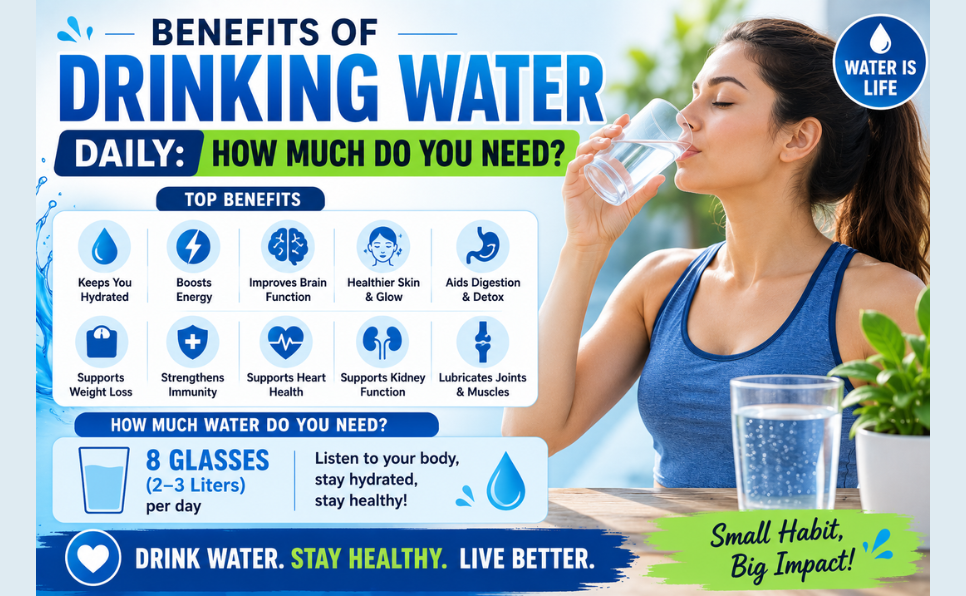
Your body is approximately 60% water — and virtually every system in it depends on staying hydrated to function properly.
Yet according to the Centers for Disease Control and Prevention (CDC), a significant percentage of adults are chronically mildly dehydrated — often without realizing it.
The symptoms? Fatigue, brain fog, headaches, poor concentration, and even increased hunger — issues that millions of people treat with caffeine, food, or medication when the real solution is simply drinking more water.
In this complete guide, you’ll learn:
- The science-backed benefits of drinking water daily
- Exactly how much water your body needs
- Signs you’re not drinking enough
- Practical strategies to stay hydrated every day
- Common hydration myths — busted
Let’s dive in. 👇
Why Water Is So Important — The Science
Water isn’t just a thirst quencher. It’s involved in virtually every biological process in your body:
| Function | How Water Helps |
|---|---|
| Temperature regulation | Sweat cools your body during heat and exercise |
| Nutrient transport | Carries vitamins, minerals, and glucose to cells |
| Waste removal | Flushes toxins through kidneys and urine |
| Joint lubrication | Cushions and lubricates joints and cartilage |
| Digestion | Dissolves nutrients for absorption, prevents constipation |
| Cognitive function | Brain is 73% water — hydration directly affects thinking |
| Blood circulation | Blood is 90% water — hydration maintains blood volume |
| Immune support | Lymphatic system (immune highway) depends on water |
Even mild dehydration — as little as 1–2% of body weight in fluid loss — can measurably impair physical and cognitive performance.

10 Science-Backed Benefits of Drinking Water Daily
1. Boosts Brain Performance and Mental Clarity
Your brain is approximately 73% water — making it extraordinarily sensitive to hydration levels.
Research shows that even mild dehydration (1–2%) causes:
- Reduced concentration and focus
- Impaired short-term memory
- Increased perception of task difficulty
- More negative mood and increased anxiety
A study published in the Journal of Nutrition found that women who were just 1.36% dehydrated experienced significantly worse mood, increased headache frequency, and impaired concentration.
Practical impact: If you’re struggling with afternoon brain fog or difficulty focusing, dehydration is often the overlooked culprit — especially before reaching for caffeine.
2. Increases Energy Levels and Reduces Fatigue
Fatigue is one of the first signs of dehydration. When your body is even slightly dehydrated, your heart has to work harder to pump blood — reducing oxygen delivery to muscles and the brain.
Why it works:
- Proper hydration maintains blood volume for efficient oxygen and nutrient transport
- Water is essential for ATP (energy molecule) production at the cellular level
- Dehydration impairs mitochondrial function — your cells’ energy factories
The result: Staying consistently hydrated throughout the day produces more stable, sustained energy than any caffeine-based solution.
3. Supports Weight Management
Water plays a meaningful role in weight management through several mechanisms:
Appetite suppression: Drinking water before meals reduces hunger and caloric intake. A study in Obesity journal found that drinking 500ml of water 30 minutes before meals led to 44% greater weight loss over 12 weeks compared to a control group.
Metabolism boost: Drinking cold water temporarily increases metabolic rate by 24–30% for about an hour as your body expends energy warming the water to body temperature.
Calorie-free hydration: Replacing caloric beverages (sodas, juices, flavored drinks) with water directly reduces caloric intake.
Practical tip: Drink a large glass of water before every meal — it takes 20 minutes for satiety signals to reach your brain, and water helps bridge that gap.
4. Improves Physical Performance
Even slight dehydration — as little as 2% fluid loss — can significantly impair athletic performance:
- Reduced strength and power output
- Faster onset of fatigue
- Impaired temperature regulation (increasing heat stroke risk)
- Reduced endurance capacity
For anyone exercising, maintaining hydration before, during, and after workouts is essential for performance, safety, and recovery.
Hydration during exercise:
- Drink 400–600ml of water 2 hours before exercise
- Drink 150–250ml every 15–20 minutes during exercise
- Rehydrate with 450–675ml for every pound of body weight lost during exercise
5. Prevents and Relieves Headaches
Dehydration is one of the most common — and most overlooked — triggers for headaches and migraines.
Research published in Headache: The Journal of Head and Face Pain found that increasing water intake significantly reduced headache intensity and duration in habitual sufferers.
When you feel a headache coming on, drinking 2–3 glasses of water is worth trying before reaching for pain medication — particularly if you haven’t been drinking enough that day.
6. Supports Kidney Health and Prevents Kidney Stones
Your kidneys filter approximately 200 liters of blood daily — requiring adequate water to function properly and excrete waste products through urine.
Inadequate water intake is the leading risk factor for kidney stones — hard mineral deposits that form when urine becomes too concentrated. Staying well hydrated keeps urine diluted, reducing crystallization.
According to the National Kidney Foundation, drinking enough water is the single most important thing you can do to prevent kidney stones — more important than dietary changes.
Target: Produce at least 2.5 liters of urine daily — a pale yellow color indicates adequate hydration.
7. Promotes Healthy, Glowing Skin
Your skin is your body’s largest organ — and its appearance and function are directly affected by hydration.
How water benefits skin:
- Maintains skin elasticity and plumpness
- Supports the skin barrier function (protection against environmental damage)
- Helps flush out toxins that can contribute to acne
- Reduces the appearance of fine lines associated with dehydration
Important: While water alone won’t reverse deep wrinkles or replace topical skincare, chronic dehydration visibly affects skin texture and elasticity. Consistent hydration is foundational for healthy skin.
8. Aids Digestion and Prevents Constipation
Water is essential for healthy digestion throughout your digestive tract:
- Saliva (99% water) begins breaking down food in your mouth
- Water helps dissolve nutrients so they can be absorbed in the small intestine
- In the large intestine, water softens stool — preventing constipation
- Adequate hydration supports regular bowel movements
Chronic dehydration is a primary driver of constipation. Increasing water intake is consistently the first recommendation healthcare providers make for constipation relief.
9. Regulates Body Temperature
Your body uses water to regulate temperature through sweating and respiration. When you’re adequately hydrated:
- You can sweat efficiently to cool your body during exercise or heat
- Your core temperature remains stable
- You’re protected against heat exhaustion and heat stroke
This becomes particularly critical during exercise, hot weather, fever, or illness — all situations where water loss accelerates significantly.
10. Supports Joint Health and Reduces Pain
Cartilage — the tissue cushioning your joints — is approximately 80% water. Staying hydrated maintains the integrity and shock-absorbing function of cartilage.
Chronic dehydration contributes to:
- Reduced joint lubrication
- Increased friction and joint pain
- Slower cartilage repair after damage
For people with arthritis or joint discomfort, adequate hydration is a simple, free intervention that supports joint health alongside other treatments.
📖 For comprehensive immune health — of which hydration is a key component — read: 10 Best Foods to Boost Your Immune System Naturally
How Much Water Do You Actually Need?
The commonly cited “8 glasses a day” rule is an oversimplification. Individual water needs vary significantly based on body size, activity level, climate, and health status.
General Guidelines (from the National Academies of Sciences):
| Group | Recommended Daily Water Intake |
|---|---|
| Adult men | ~3.7 liters (125 oz / about 15 cups) total |
| Adult women | ~2.7 liters (91 oz / about 11 cups) total |
| Pregnant women | ~3.0 liters (101 oz) |
| Breastfeeding women | ~3.8 liters (128 oz) |
Important: These totals include water from ALL sources — beverages AND food. About 20% of daily water intake comes from food (fruits, vegetables, soups).
Factors That Increase Your Water Needs:
| Factor | Why More Water Is Needed |
|---|---|
| Exercise | Sweat loss increases significantly |
| Hot/humid climate | Increased perspiration |
| Fever or illness | Body uses more water fighting infection |
| Pregnancy/breastfeeding | Supporting baby’s development |
| High-fiber diet | Fiber absorbs water in the digestive tract |
| High altitude | Increased respiration rate causes more water loss |
The Simplest Hydration Check: Your Urine Color
Your urine color is the most practical real-time indicator of hydration status:
| Urine Color | Hydration Status | Action |
|---|---|---|
| Pale yellow / Clear | Well hydrated ✅ | Maintain current intake |
| Yellow | Adequately hydrated | Keep drinking regularly |
| Dark yellow | Mildly dehydrated ⚠️ | Drink 1–2 glasses now |
| Amber / Orange | Significantly dehydrated ❌ | Drink water immediately |
| Brown | Severely dehydrated / possible medical issue | Seek medical attention |
Signs You’re Not Drinking Enough Water
Many people confuse dehydration symptoms with other conditions. Watch for:
- Persistent fatigue — especially afternoon energy crashes
- Frequent headaches — particularly tension headaches
- Dark-colored urine — most reliable visual indicator
- Dry mouth and bad breath — saliva production decreases with dehydration
- Difficulty concentrating — brain function impairment
- Hunger shortly after eating — thirst is often mistaken for hunger
- Dry skin — particularly on hands and face
- Constipation — inadequate water in the digestive tract
- Muscle cramps — electrolyte imbalance from dehydration
- Dizziness when standing — reduced blood volume
10 Practical Strategies to Drink More Water Daily
1. Start Your Day With Water
Drink a large glass of water immediately upon waking — before coffee, before breakfast. You’ve been fasting (and losing water through breathing) for 7–8 hours.
2. Carry a Reusable Water Bottle
Having water visible and accessible dramatically increases intake. Choose a bottle large enough that you only need to refill it 2–3 times per day.
3. Set Hourly Reminders
Use your phone or a hydration app to remind you to drink every hour during waking hours.
4. Drink a Glass Before Every Meal
This habit serves double duty — it ensures regular water intake AND supports weight management by reducing meal-time hunger.
5. Eat More Water-Rich Foods
These foods contribute significantly to daily hydration:
| Food | Water Content |
|---|---|
| Cucumber | 96% |
| Lettuce | 95% |
| Celery | 95% |
| Tomatoes | 94% |
| Watermelon | 92% |
| Strawberries | 91% |
| Oranges | 87% |
6. Flavor Your Water Naturally
If plain water feels boring, add:
- Sliced citrus (lemon, lime, orange)
- Fresh mint leaves
- Cucumber slices
- Berries
- A splash of 100% fruit juice
7. Drink Water Before, During, and After Exercise
Make hydration part of your workout routine — not an afterthought.
8. Replace One Daily Beverage With Water
Swap one coffee, soda, or juice per day with water. This reduces calories while increasing hydration.
9. Track Your Intake
Use apps like WaterMinder, Hydro Coach, or simply mark your water bottle with time goals.
10. Drink Herbal Tea
Herbal teas (caffeine-free) count toward daily water intake — and provide additional antioxidants.
Hydration Myths — Busted
❌ Myth 1: “You Must Drink Exactly 8 Glasses a Day”
The 8×8 rule has no strong scientific backing. Individual needs vary widely. Use thirst and urine color as your primary guides.
❌ Myth 2: “Coffee and Tea Don’t Count Because of Caffeine”
Moderate caffeine consumption (up to 400mg/day) doesn’t cause net dehydration. Coffee and tea do count toward daily fluid intake — though water remains the best choice.
❌ Myth 3: “Drinking Lots of Water Flushes Out Toxins”
Your kidneys and liver handle toxin removal — water supports this process but doesn’t dramatically accelerate it beyond adequate hydration. “Detox” water claims are mostly marketing.
❌ Myth 4: “You Can’t Drink Too Much Water”
Overhydration (hyponatremia) is a real condition — though rare — where drinking excessive water dilutes blood sodium to dangerous levels. This is almost exclusively a risk during extreme endurance events. For most people, drinking to thirst is perfectly safe.
❌ Myth 5: “Thirst Means You’re Already Dehydrated”
Mild thirst is a normal, useful signal — not a sign of significant dehydration. Simply respond to thirst by drinking water. The idea that “by the time you feel thirsty it’s too late” is exaggerated for most people in normal circumstances.
Water and Other Health Habits
Hydration works best as part of a broader healthy lifestyle:
📖 Better sleep and hydration are deeply connected — dehydration worsens sleep quality: How to Improve Sleep Quality: 15 Proven Tips
📖 Staying hydrated also helps manage stress and anxiety: How to Reduce Stress and Anxiety: 15 Proven Techniques
Complete Daily Hydration Checklist
- Large glass of water immediately upon waking
- Water bottle filled and visible at all times
- Glass of water before every meal
- Urine color checked — pale yellow or lighter
- Hourly water reminder set
- Water-rich foods included in at least 2 meals
- Rehydration planned before, during, and after exercise
- One sugary or caffeinated beverage replaced with water
- Herbal tea counted toward daily intake
- Total intake: ~2.7L (women) or ~3.7L (men) from all sources
Conclusion — The Simplest Health Habit You Can Start Today
Drinking adequate water daily is the most accessible, affordable, and impactful health habit available to virtually everyone.
The benefits span every system in your body — from sharper thinking and more energy to healthier skin, better digestion, and stronger kidneys. And unlike most health interventions, proper hydration costs almost nothing and starts working immediately.
Your action plan starting today:
- Drink a large glass of water right now
- Set an hourly reminder on your phone
- Fill a water bottle and keep it visible all day
- Check your urine color — aim for pale yellow
- Drink a glass before every meal
The simplest improvements are often the most powerful. Staying well hydrated is living proof of that.
Frequently Asked Questions (FAQ)
Does drinking water help with weight loss?
Yes — water supports weight loss by suppressing appetite (especially when drunk before meals), temporarily boosting metabolism, and replacing caloric beverages. It’s not a magic solution, but it’s a meaningful, evidence-backed supporting factor in any weight management strategy.
Is sparkling water as hydrating as still water?
Yes — carbonated water hydrates just as effectively as still water. The carbonation doesn’t impair hydration. Plain sparkling water (without added sugar or sodium) is a perfectly good alternative for people who find still water boring.
Does drinking water improve skin?
Adequate hydration maintains skin elasticity and plumpness, and supports the skin barrier function. However, drinking extra water beyond what your body needs won’t dramatically transform skin appearance — that’s largely determined by genetics, sun exposure, and topical skincare.
Can I count coffee toward my daily water intake?
Yes — moderate coffee and tea consumption (up to 400mg caffeine/day) counts toward daily fluid intake. The mild diuretic effect of caffeine doesn’t negate the hydrating effects of the beverage. However, plain water remains the best hydration choice.
What is the best time to drink water?
There’s no single “best” time — consistent intake throughout the day is more important than timing. That said, drinking water first thing in the morning, before meals, and before/during/after exercise are particularly beneficial moments.
How do I know if I’m drinking too much water?
Overhydration is rare for most people drinking to thirst. Warning signs include: clear, colorless urine consistently, nausea, headache, or confusion — which can indicate low sodium levels (hyponatremia). If you’re drinking extraordinary amounts without feeling thirst, consult a healthcare provider.
This article is for informational purposes only and is not a substitute for professional medical advice. Individual hydration needs vary — consult a healthcare professional for personalized guidance.
Found this guide helpful? Share it with someone who needs a simple health boost. Questions? Drop them in the comments — we answer every one!