Ever wonder how your browser finds a website among billions? When you type a web address, it’s like a secret handshake. It connects your device to a server far away. Before using a domain, you also need reliable web hosting, so be sure to read our guide on What Is Web Hosting?
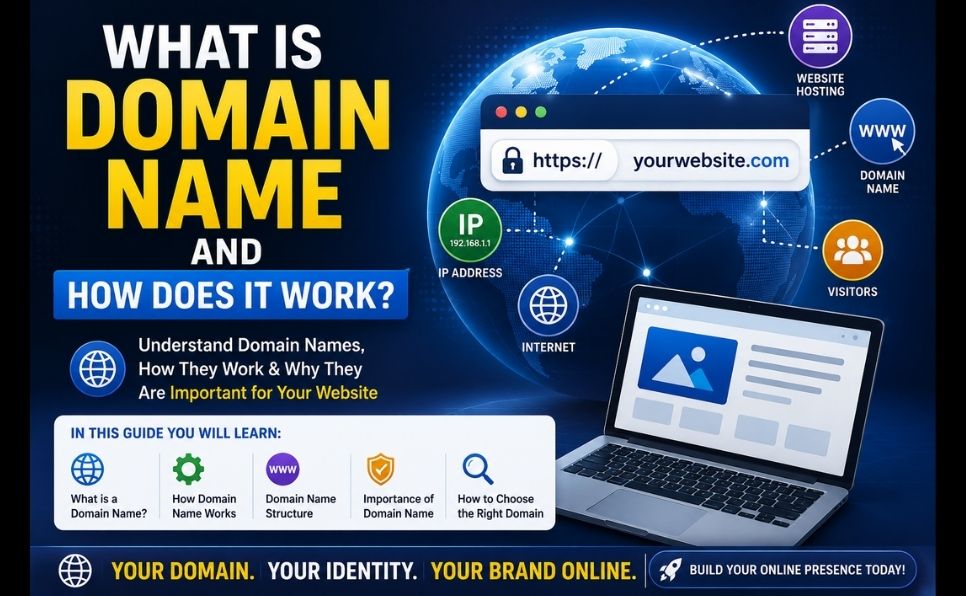
What is Domain Name technology? It’s like a friendly name for websites. It makes long numbers called IP addresses easier to remember.

How does a domain work
Learning about how does a domain work helps you online. It connects tech stuff to what we see. Knowing this lets you create a trusted online space for people to find you.
Key Takeaways
- Domains act as human-readable addresses for websites.
- They replace complex numerical IP addresses for easier navigation.
- The system functions as a bridge between users and web servers.
- Understanding these identifiers is essential for a professional online presence.
- Proper domain management ensures your site remains accessible to your audience.
Understanding the Basics of Domain Names
Learning about web addresses is key. Every site uses a special naming rule. This rule helps users find the right place online.
Definition of a Domain Name
What is domain name technology? It’s the easy-to-read address for websites. It replaces the long numbers computers use.
Without these names, we’d have to remember lots of numbers. This makes the web easy for all of us to use.
Components of a Domain Name
A web address has several parts. These domain name components include the top-level domain and the second-level domain.
The second-level domain is your unique name, like “google” or “wikipedia.” The top-level domain comes after the dot. It shows the site’s category or country.
Different Types of Domain Names
The internet address system sorts domains by purpose and origin. These categories help us know what a site is about before we visit.
There are generic top-level domains like .com, .org, and .net. Country-code domains like .us or .uk show where a site is from.
Choosing the right type is essential for branding. It shows your site fits in with industry standards and what users expect.
The Role of Domain Names in the Internet
Without domain names, the internet would be hard to navigate. These names help us find what we need online. They make the internet easy for everyone to use.
How Domain Names Facilitate Browsing
When you type a website’s address, your browser does a lot of work. It turns the name into numbers that computers can understand. This makes it easy for us to find what we need online.
This process is fast and happens without us noticing. The main benefit is how fast and easy it is. It lets us find what we want quickly, making the internet more user-friendly.
Importance of User-Friendly Domain Names
Choosing the right name for your website is key. A simple name makes it easier for people to find and remember your site. This helps keep visitors coming back.
Here are some User-friendly domain tips: make your name short and easy to say. Avoid hyphens and make it easy to type. A good name helps your business reach more people without any problems.
Domain Name Structure Explained
Every web address has a complex system behind it. This internet address system makes sure you get to the right place when you type a name. It’s all about the hidden rules of the internet.
The Domain Name System (DNS)
To understand DNS in more detail, you can also explore Cloudflare’s educational resource on What Is DNS? It changes names into numbers that computers understand. Without it, we’d have to remember lots of numbers for every website.
This system has a special order. It starts at the top and goes down to manage all the data. It shows how our requests find the right website’s number.
Top-Level Domains (TLDs)
At the top, we have Top-Level Domains, or TLDs. These are things like .com, .org, and .net. They help sort out the huge internet into smaller parts. You can find the complete list of officially recognized TLDs in the IANA Root Zone Database.
They help keep the internet organized. This makes it easier for everyone to find what they need.
Choosing the Right Domain Name
Your domain name is like a digital storefront for your brand. It’s often the first thing people see when they find your business. Choosing a domain name that shows what your business is about is very important.
Tips for Selecting an Effective Domain
Start by making your name simple and easy to understand. A short, easy-to-remember name is best. User-friendly domain tips say to keep it under fifteen characters.
Don’t use hyphens or numbers because they can cause mistakes. Use the .com extension to make it easy for people to find you. A clear name helps build trust and makes your brand more known.
Avoiding Common Pitfalls
Don’t forget to check if the name you want is already taken. Make sure it doesn’t belong to someone else to avoid legal trouble. Protecting your brand from the start saves a lot of time and money.
Also, avoid using weird or hard-to-understand domain extensions. Stick to the usual ones like .com. Consistency and professionalism help keep your online presence strong and growing.
Registering Your Domain Name
Getting your digital identity starts with registering your name. When you learn how to buy a domain, you get to use that address for your site. ICANN oversees the global domain name system and accreditation of registrars. approved registrar to keep your site safe and easy to handle.

Domain registration process
How to Register a Domain Name
The first step is to check if your name is free. Use a search tool on a registrar’s site. If it’s taken, you might need to pick a different name or a variation.
When you find a free name, add it to your cart. Knowing how to buy a domain means looking for clear prices and no hidden costs. Some registrars offer extra services like email or website builders to help you start.
Domain Registration Process
The domain registration process asks for your contact info. This includes your name, address, and email. This info goes into the WHOIS database, a public list of who owns what domain.
You can choose to hide your info with privacy protection. After you give your info, you pay to complete the deal. Then, you verify your email to make your registration official. This domain registration process makes your web address ready for your site.
Domain Name Hosting Explained
If you’re new to hosting, check out our complete guide on What Is Web Hosting? to understand how domains and hosting work together. Many newbies mix these up, but they’re different. A domain name is like your website’s address. Hosting is where your site lives.
What is Domain Hosting?
Domain hosting services are the base of your online world. They give you space on a server for your site’s files and more. Without hosting, your domain name won’t work, and visitors will see an error.
Many hosting companies also use WHMCS to automate billing and customer management. Learn more in our WHMCS Guide. always online. This keeps your site open to visitors everywhere, anytime. Good domain hosting services help your site load fast and stay up.
How Hosting Works with Domain Names
The link between your domain and hosting server uses the Domain Name System, or DNS. When someone types in your site’s address, DNS finds the right server. This server holds your site’s files.
To connect your domain to your hosting, update your DNS settings. This tells the internet where to find your site. Proper configuration makes sure your site works for everyone.
Managing Your Domain Name
Good domain name management keeps your website safe and easy to find. It keeps your online identity strong and open to your visitors always.
Renewing Your Domain Name
Renewing your domain name on time is key. If you miss the deadline, your domain might be lost or sold to someone else.
Many registrars have an auto-renew feature. This feature helps keep your domain safe without you having to remember to renew it.
Transferring Domain Names
At times, you might want to switch to a new registrar for better deals or support. A good domain transfer guide helps make this move easy and keeps your site running smoothly.
To start, unlock your domain at your current registrar and get an authorization code. Then, give this code to your new registrar, and they’ll take care of the transfer.
Make sure your contact info is current before you transfer. This way, you get all the important emails and updates during the move.
SEO and Domain Names
To improve your website’s visibility, you should also understand On-Page SEO and follow a proper Technical SEO Checklist. A domain is more than just a website address. It tells search engines about your content. Understanding the SEO impact of domains is vital for a strong online presence.
Impact of Domain Names on SEO
A good domain name can help your search rankings. It gives context to users and search engines. When your domain has relevant terms, search engines can categorize your site better.
This clarity can make your site more visible in search results. A clear, professional, and easy-to-remember URL can also boost your click-through rates. This makes users more likely to click on your link, which helps your SEO impact of domains.
Best Practices for SEO-Friendly Domains
Start with a simple, easy-to-read URL. Avoid hyphens, numbers, and complex characters. You should also create high-quality, SEO-friendly content that supports your domain authority., which boosts your site’s authority.
Choose a domain that includes a primary keyword. But don’t stuff your URL with too many keywords. This can trigger spam filters and harm your reputation.
Use a reputable top-level domain like .com. This makes your site seem credible. By following these SEO best practices for domains, you lay a solid foundation for your website. This helps attract more visitors and keeps your brand competitive.
Domain Name Legal Considerations
Having a domain name is more than just signing up. You need to know about legal issues. Make sure your web address doesn’t hurt others’ rights. Knowing how to handle trademark and domain disputes is key for a safe online space.
Trademark Issues with Domain Names
Choosing a domain name can lead to trouble if it’s too close to someone else’s trademark. If your name is too similar, you might get sued. Do a good trademark search before you buy your domain.
Companies watch the web for name misuse. If they find your domain is wrong, they might send you a warning. This could mean losing your domain or facing a big lawsuit.
Domain Disputes: What to Know
There are ways to solve disputes without going to court. The Uniform Domain-Name Dispute-Resolution Policy, or UDRP, is one. It helps settle domain name fights.
With the UDRP, you must show the domain name is the same as your trademark. And the current owner has no right to it. Knowing these rules helps protect your brand and handle trademark and domain disputes well. Stay informed to keep your online space safe and professional.
Future of Domain Names
The digital world is always changing. This means how we show our online presence is evolving too. Looking ahead, we see a move towards a more open internet.
Shifting Trends in Web Identity
Niche top-level domains are changing how brands reach out to people. These special extensions show right away what a business is about. As more people get online, these names help everyone find what they need.
The Impact of Modern Innovation
New web technologies are changing the internet’s structure.If you’re interested in decentralized technologies, read our beginner-friendly article on What Is Blockchain Technology? without needing a central boss. This gives people more control over their digital world.
Keeping up with these changes helps you stay ahead. Watch how these new ideas affect your online plans. By adapting, you keep your online presence strong for the future.
Building a strong internal linking strategy helps search engines understand your website structure and improves user navigation.