Search Engine Optimization has never been more important — or more misunderstood.
In 2026, Google processes over 8.5 billion searches per day. The websites that appear on page one capture over 90% of all clicks. The websites on page two and beyond? Almost invisible.
SEO is what determines which side of that divide you’re on.
But here’s the problem: most SEO guides are either too basic to be useful or so technical they’re impossible to act on. This guide is different.
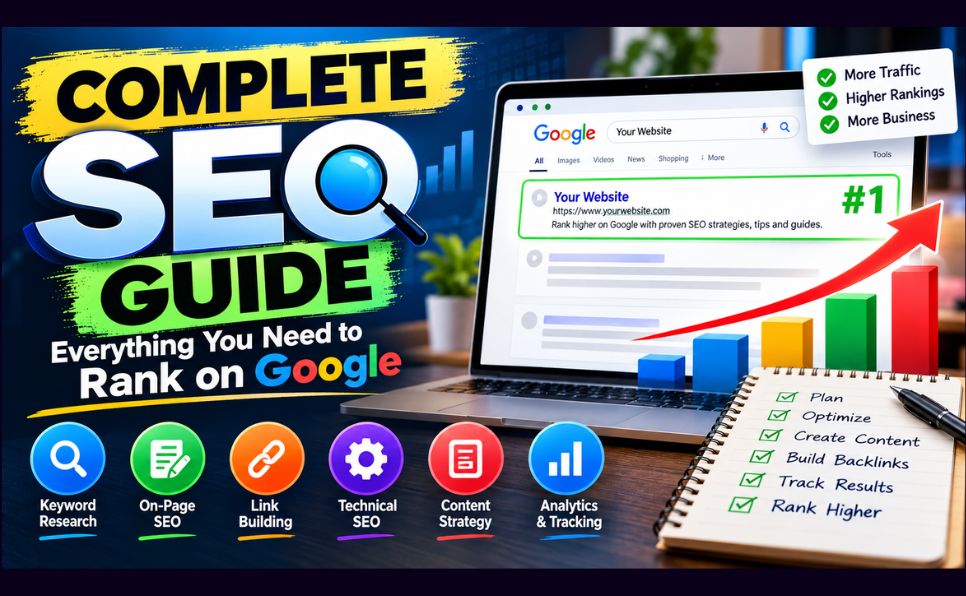
This is the complete SEO guide for 2026 — covering every element of modern search engine optimization in one place, with links to deeper guides on every topic. Whether you’re a complete beginner or an experienced marketer looking to update your knowledge, this guide gives you a clear, actionable roadmap.
Here’s what you’ll learn:
- What SEO actually is and how search engines work
- The 5 pillars of modern SEO in 2026
- Step-by-step process for each pillar
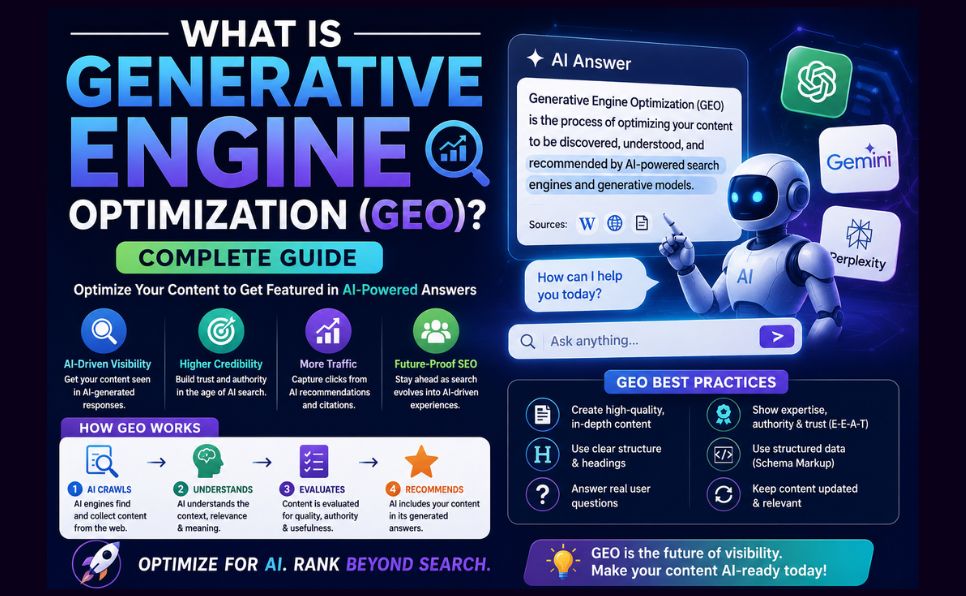
- How AI has changed SEO forever
- Common SEO mistakes and how to avoid them
- A complete SEO action plan you can start today
Let’s build your search visibility from the ground up. 👇

What Is SEO? (And Why It Matters More Than Ever in 2026)
Search Engine Optimization (SEO) is the practice of optimizing your website and content so that search engines like Google rank it higher in search results — driving free, organic traffic to your site.
Unlike paid advertising (PPC), SEO traffic is:
- Free — you don’t pay per click
- Sustainable — rankings you build last for months or years
- Compounding — more content + more links = exponentially more traffic over time
- Trusted — users trust organic results more than ads
How Big Is Organic Search?
- 68% of all online experiences begin with a search engine
- 53% of all website traffic comes from organic search
- The #1 result on Google gets approximately 27% of all clicks
- Results on page 2 get less than 1% of clicks
The difference between ranking #1 and #5 for a high-volume keyword can be worth hundreds of thousands of dollars in traffic value annually.
How Search Engines Work
Google’s job is to find, understand, and rank the best content for every search query. It does this through three processes:
1. Crawling: Google’s bots (called Googlebot) continuously browse the web following links from page to page, discovering new and updated content.
2. Indexing: Google stores and organizes discovered content in its massive index — essentially a copy of the web that Google can search instantly.
3. Ranking: When someone searches, Google’s algorithm evaluates hundreds of signals to determine which indexed pages best answer the query — and in what order to display them.
Your entire SEO strategy is about optimizing for all three stages: making sure Google can crawl your site, that your content gets indexed, and that the algorithm ranks you above competitors.
The 5 Pillars of SEO in 2026
Modern SEO in 2026 rests on five interconnected pillars. Weakness in any one pillar limits your overall performance — strength in all five compounds your results.
| Pillar | What It Covers | ||
|---|---|---|---|
| 1. | |||
| Keyword Research | Finding the right queries to target | ||
| 2. | |||
| On-Page SEO | Optimizing individual pages | ||
| 3. | |||
| Technical SEO | Site health, speed, crawlability | ||
| 4. | |||
| Link Building | Earning authority and trust | ||
| 5. | |||
| AI and Search Intent | Understanding how Google’s AI evaluates content |
Pillar 1: Keyword Research — The Foundation of Everything
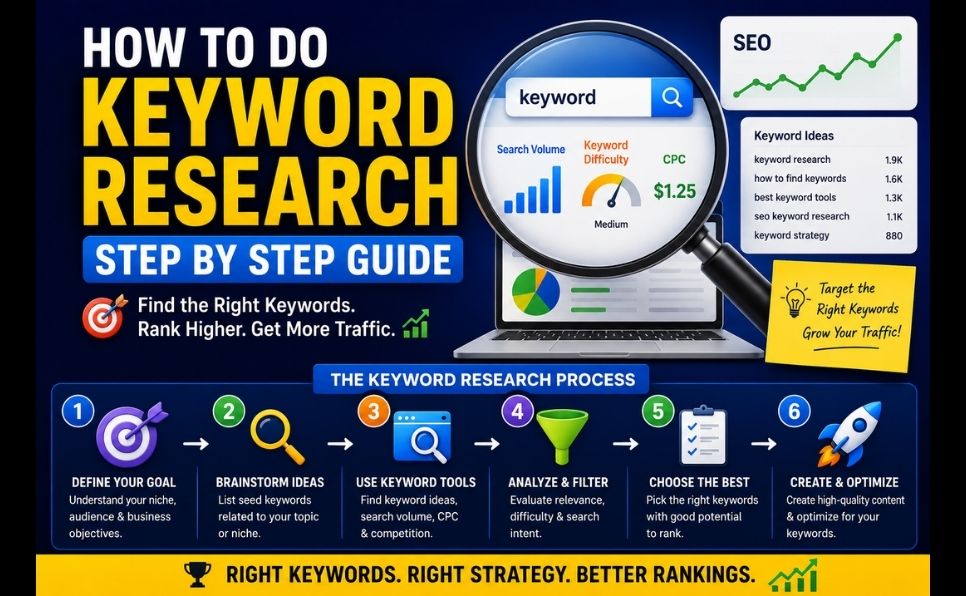
Keyword research is the process of finding the exact words and phrases your target audience types into search engines — so you can create content that matches what they’re already looking for.
Every piece of content on your site should target a specific keyword. Without this, you’re creating content and hoping Google figures out what it’s about.
The Core Keyword Concepts:
Search Volume: How many times a keyword is searched per month. Higher volume = more potential traffic, but usually more competition.
Keyword Difficulty (KD): How hard it is to rank for a keyword, scored 0–100. New sites should target KD 0–30.
Search Intent: The reason behind a search — informational (learning), commercial (comparing), or transactional (buying). Your content must match intent or it won’t rank.
Long-Tail Keywords: Phrases of 3+ words with lower volume but lower competition and higher conversion rates. The best starting point for new websites.
How to Find Keywords:
- Start with a seed keyword (your main topic)
- Expand using Google Autocomplete and “People Also Ask”
- Check volume and difficulty in Google Keyword Planner or Ubersuggest
- Analyze the top-ranking pages for your target keyword
- Select keywords with realistic competition for your site’s authority
Target Keyword Criteria for Beginners:
| Factor | Target Range |
|---|---|
| Monthly searches | 100–2,000 |
| Keyword difficulty | 0–30 |
| Intent match | Matches your content type |
| Word count | 3–6 words (long-tail) |
📖 Complete keyword research tutorial: Keyword Research for Beginners: Step-by-Step Complete Guide
Pillar 2: On-Page SEO — Optimizing Every Page
On-page SEO refers to everything you do directly on your pages to help them rank. It’s 100% in your control — and it’s where most beginners can make the fastest improvements.
Critical On-Page Elements:
Title Tag: The most important on-page element. Include your primary keyword near the beginning. Keep it under 60 characters.
Meta Description: The preview text shown in search results. Include your keyword naturally. Keep it under 155 characters. Influences click-through rate significantly.
H1 Heading: One per page, containing your primary keyword.
URL Structure: Short, keyword-focused URLs. Use hyphens between words. Example: /on-page-seo-guide/ not /the-complete-guide-to-on-page-seo-optimization-2026/
Content Quality: Comprehensive, accurate, and genuinely helpful. Covers the topic better than competing pages. Written for humans first.
Keyword Placement: Primary keyword in the first 100 words, at least one H2, and naturally throughout. Never stuffed.
Internal Links: Connect related pages on your site. Minimum 3–5 internal links per article. Use descriptive anchor text.
Image Optimization: Descriptive file names, alt text with keywords where natural, compressed under 100KB.
Schema Markup: Structured data that helps Google understand your content and enables rich results (star ratings, FAQ dropdowns, etc.).
📖 Complete on-page optimization guide: On-Page SEO Complete Guide 2026
📖 How to write SEO-optimized content: How to Write an SEO-Friendly Blog Post
📖 Schema markup implementation: Schema Markup: What It Is and How to Add It
Pillar 3: Technical SEO — The Foundation Your Site Runs On
Technical SEO ensures search engines can find, crawl, and index your content efficiently. You can have the best content in the world — but if Google can’t access it, it won’t rank.
Core Technical SEO Elements:
Site Speed and Core Web Vitals: Google officially uses page speed as a ranking factor. The three Core Web Vitals metrics:
| Metric | Measures | Target |
|---|---|---|
| LCP (Largest Contentful Paint) | Loading speed | Under 2.5 seconds |
| INP (Interaction to Next Paint) | Responsiveness | Under 200ms |
| CLS (Cumulative Layout Shift) | Visual stability | Under 0.1 |
Mobile-First Indexing: Google primarily uses the mobile version of your site for ranking. A non-mobile-friendly site loses rankings regardless of desktop performance.
XML Sitemap: A file listing all your important URLs, submitted to Google Search Console to help Google discover and crawl your pages.
Robots.txt: A file telling search engines which pages to crawl and which to ignore.
HTTPS/SSL: A confirmed ranking factor since 2014. Every page must be served over HTTPS.
Crawl Budget: For larger sites, Google allocates a limited number of pages to crawl. Eliminate low-quality pages, fix broken links, and avoid duplicate content to maximize crawl budget efficiency.
Canonical Tags: Tell Google which version of a page is the “original” when duplicate content exists — preventing you from competing against your own pages.
📖 Complete technical SEO audit: Technical SEO Checklist
📖 XML sitemap setup: XML Sitemap: Complete Guide
📖 Page speed optimization: Page Speed Optimization: Complete Guide
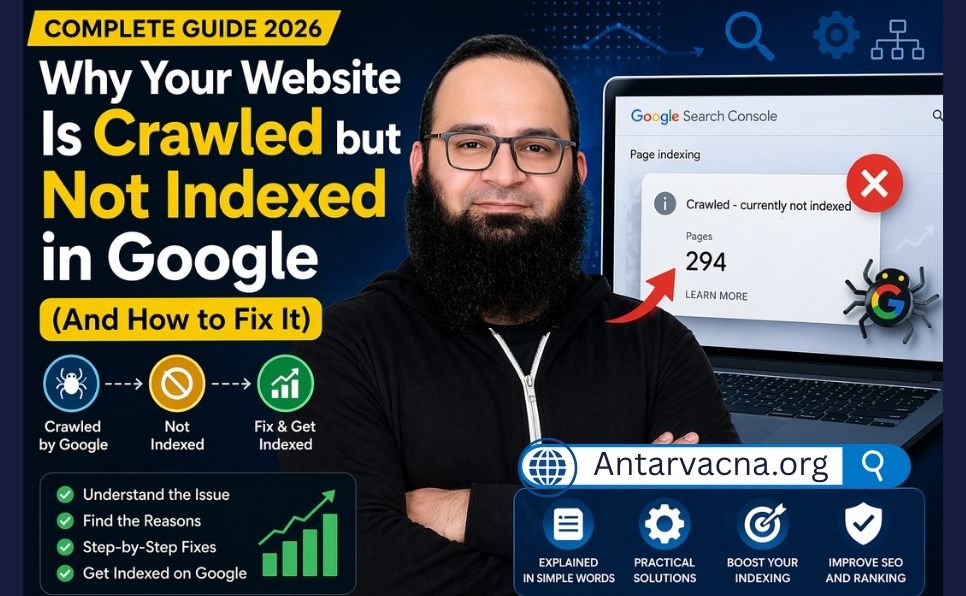
📖 Fix indexing problems: Crawled Currently Not Indexed — Complete Fix Guide
📖 Get pages indexed faster: How to Get Your Website Indexed Faster on Google
Pillar 4: Link Building — Earning Authority and Trust
Backlinks — links from other websites to yours — remain one of Google’s top three ranking factors. They signal to Google that other sites trust and endorse your content.
But not all links are equal. A single link from an authoritative, relevant website is worth more than hundreds of links from low-quality sites.
What Makes a Backlink Valuable:
- Relevance: The linking site covers related topics
- Authority: The linking site has high domain authority and trust
- Placement: In the main body of content — not footers or sidebars
- Anchor text: Descriptive and natural — not over-optimized
- Uniqueness: From a domain that hasn’t linked to you before
Proven Link Building Strategies for 2026:
Guest Posting: Write valuable articles for relevant websites in your niche in exchange for a backlink. Quality over quantity — target sites with real audiences.
Broken Link Building: Find broken links on relevant websites and offer your content as a replacement. You help them fix a problem while earning a link.
HARO (Help a Reporter Out): Respond to journalist queries with expert insights. Earn high-authority links from news publications and major blogs.
Original Research: Create original data, surveys, or studies. Data gets cited — and citations mean backlinks.
Skyscraper Technique: Find well-linked content in your niche, create something better, and reach out to sites linking to the original.
Link Building to Avoid:
Buying links, link farms, private blog networks (PBNs), and automated link generation all violate Google’s guidelines and risk penalties — including complete removal from search results.
📖 Complete backlink building guide: What Is a Backlink and How to Build Them
📖 Ethical vs. manipulative link building: White Hat vs Black Hat Link Building: Which Is Better?
📖 Domain authority and how to build it: Domain Authority: What It Is and How to Increase It
Pillar 5: AI Search and Search Intent — The 2026 Game Changer
This is the pillar that most older SEO guides miss entirely — and it’s the one that’s changed most dramatically in recent years.
Google’s algorithm is no longer a keyword-matching system. It’s a sophisticated AI that understands meaning, context, intent, and quality at a near-human level.
Google’s AI Systems:
- RankBrain (2015): Interprets ambiguous queries using machine learning
- BERT (2019): Understands natural language and context
- MUM (2021): Processes text, images, and video simultaneously
- Gemini (2024–2026): Powers AI Overviews — summarizes and answers directly in search results
What AI Search Means for Your SEO:
Search intent is everything. Google’s AI determines why someone is searching — not just what they typed. Content that doesn’t match intent won’t rank, regardless of optimization.
E-E-A-T signals matter more than ever. Experience, Expertise, Authoritativeness, and Trustworthiness are evaluated by Google’s AI at scale. Demonstrate real expertise — not just keyword density.
AI Overviews change how traffic flows. For informational queries, Google now shows AI-generated summaries at the top of results. Sites cited in AI Overviews receive significant visibility even without a #1 ranking.
Topical authority beats individual page optimization. Sites with comprehensive coverage of a topic outperform sites with isolated well-optimized pages. Topic clusters — a pillar article linking to related cluster articles — is the dominant content architecture in 2026.
📖 Complete AI ranking factors guide: What Are AI Search Ranking Factors? Complete Guide
Topic Clusters — The Content Architecture That Dominates in 2026
Topic clusters are the most important content strategy concept in modern SEO. Here’s how they work:
Pillar Article: A comprehensive guide covering a broad topic (like this article on SEO). Links to all related cluster articles.
Cluster Articles: In-depth guides on specific subtopics, each linking back to the pillar.
The result: Google recognizes your site as an authority on the entire topic — and boosts rankings across all related pages.
Your SEO Topic Cluster (Already Built):
PILLAR: Complete SEO Guide 2026 ← (This article)
        ↓
├── Keyword Research for Beginners ✅
├── On-Page SEO Complete Guide ✅
├── How to Write SEO-Friendly Blog Post ✅
├── Technical SEO Checklist ✅
├── Internal Linking Strategy ✅
├── Internal Linking Strategy for SEO (Complete Guide) ✅
├── White Hat vs Black Hat Link Building ✅
├── Domain Authority Guide ✅
├── Competitor Analysis for SEO ✅
├── Schema Markup Guide ✅
├── XML Sitemap Guide ✅
├── Page Speed Optimization ✅
├── Local SEO Guide ✅
├── Google Search Console Guide ✅
├── Crawled Not Indexed Fix ✅
├── How to Get Indexed Faster ✅
└── AI Search Ranking Factors ✅
This is exactly the architecture Google rewards — comprehensive, interconnected coverage of an entire topic.
📖 How to build topic clusters with internal linking: Internal Linking Strategy for SEO: Complete Guide
Google Search Console — Your SEO Command Center
No SEO strategy is complete without Google Search Console — Google’s free tool that shows you exactly how your site performs in search.
What GSC tells you:
- Which keywords are bringing traffic to your site
- Which pages are indexed and which aren’t
- Technical errors affecting your rankings
- Core Web Vitals performance for your pages
- Manual penalties from Google
- Backlinks Google has discovered to your site
Essential GSC workflows:
- Submit your XML sitemap for faster indexing
- Use URL Inspection to request indexing for new articles
- Monitor the Coverage report for indexing issues
- Track keyword rankings in the Performance report
- Check Core Web Vitals for page experience issues
📖 Complete Google Search Console tutorial: Google Search Console Complete Guide
Competitor Analysis — Learn From What’s Already Working
The fastest path to SEO success is studying what already works in your niche — and doing it better.
Competitor analysis reveals:
- Which keywords your competitors rank for that you don’t
- What content formats Google rewards for your target keywords
- Where your competitors get their backlinks from
- Content gaps you can exploit
The competitor analysis process:
- Identify your top 3–5 SEO competitors (those ranking for your target keywords — not necessarily your business competitors)
- Analyze their top-ranking content
- Find keyword gaps — keywords they rank for, you don’t
- Study their backlink profile
- Create better content targeting their winning keywords
📖 Complete competitor analysis guide: How to Do Competitor Analysis for SEO
Local SEO — Ranking in Your City
If your business serves a local area, local SEO is as important as general SEO — and often easier to win.
Local SEO essentials:
- Google Business Profile — fully optimized
- Consistent NAP (Name, Address, Phone) across all directories
- Local citations — listed in relevant directories
- Google reviews — actively collected and responded to
- Local content — articles about your city and community
📖 Complete local SEO guide: Local SEO Guide for Small Businesses
Common SEO Mistakes That Kill Rankings
❌ Targeting Keywords Too Competitive
New sites targeting “SEO,” “digital marketing,” or “web hosting” will never rank. Start with ultra-specific long-tail keywords with KD under 20.
❌ Ignoring Search Intent
Writing an informational article when the keyword has transactional intent — or vice versa — means you’ll never rank, regardless of quality.
❌ Thin Content
Articles under 800 words rarely rank for competitive keywords. Comprehensive content that fully covers a topic consistently outranks thin pages.
❌ No Internal Linking
New articles with no internal links from existing pages are harder for Google to discover and rank. Every new article should receive links from 2–3 existing related articles.
❌ Buying Backlinks
Paid links violate Google’s guidelines and risk manual penalties. Build links through genuine content value, outreach, and relationships.
❌ Ignoring Technical Issues
A slow site with broken links, duplicate content, and indexing errors will never reach its potential regardless of content quality. Fix technical issues first.
❌ No Patience
SEO takes time. Most new sites need 6–12 months of consistent effort before seeing significant organic traffic. The sites that succeed are the ones that keep publishing and building for the long term.
Your Complete SEO Action Plan for 2026
Month 1: Foundation
- Set up Google Search Console and submit sitemap
- Fix all technical SEO issues (speed, mobile, HTTPS)
- Research and document 20–30 target keywords
- Publish 4–6 well-optimized articles targeting low-competition keywords
- Add internal links between all published articles
Month 2–3: Content and Links
- Publish 4–8 more articles — building your topic cluster
- Begin link building (HARO, 2 guest posts/month)
- Request indexing for all articles in Google Search Console
- Monitor GSC for indexing issues and fix them
- Update existing articles based on performance data
Month 4–6: Scale and Optimize
- Analyze GSC — which articles are getting impressions?
- Update and expand articles with growing impressions
- Increase link building to 4–6 guest posts/month
- Begin targeting medium-competition keywords
- Build your pillar + cluster content architecture
Month 6–12: Authority Building
- Create original research or data-driven content
- Pursue high-authority HARO links and editorial coverage
- Optimize for AI Overviews with FAQ sections and schema
- Expand into related topics — new keyword clusters
- Track and celebrate ranking improvements
Complete SEO Checklist — Use Before Every Article
Before Writing:
- Keyword researched and confirmed (volume, difficulty, intent)
- SERP analyzed — top 5 results studied
- Content outline created
While Writing:
- Primary keyword in H1, first 100 words, at least one H2
- Content is comprehensive — covers all related subtopics
- FAQ section added (4–6 questions)
- 3–5 internal links added
Before Publishing:
- Meta title under 60 characters, keyword included
- Meta description under 155 characters
- URL slug is short and keyword-focused
- Images compressed and have alt text
- Schema markup added (Article + FAQ minimum)
After Publishing:
- GSC URL Inspection → Request Indexing
- Add internal link from existing related article
- Share on social media
Conclusion — SEO Is a Long Game Worth Playing
SEO is not a quick-win strategy. It’s a long-term investment that compounds over time — the content and links you build today continue paying dividends for years.
The sites that dominate Google search in 2026 are the ones that:
- Create genuinely helpful, comprehensive content
- Build real backlinks through value and relationships
- Maintain technically healthy, fast-loading sites
- Demonstrate real expertise and trustworthiness
- Publish consistently and play the long game
Every article you publish, every backlink you earn, every technical issue you fix — it all compounds. Six months from now, the sites that started today will be ahead of those that waited.
Start your SEO journey with the complete guides linked throughout this article. Come back to this pillar guide whenever you need to see the full picture.
The first page of Google is waiting. Go claim your spot.
Frequently Asked Questions (FAQ)
How long does SEO take to show results?
Most new websites start seeing meaningful organic traffic after 4–6 months of consistent effort. Significant results — hundreds or thousands of monthly visitors — typically take 9–12 months. The exact timeline depends on your niche competition, publishing frequency, and link building consistency.
Is SEO free?
The core of SEO — creating content, building internal links, optimizing pages — costs only your time. Tools like Google Search Console and Google Keyword Planner are free. Paid tools (Ahrefs, SEMrush) are helpful but not required for beginners. Link building may involve investment in content creation or outreach.
How many articles do I need to rank?
There’s no magic number — but topic authority matters. A site with 15–20 well-optimized, interconnected articles on a focused topic typically outperforms a site with 100 scattered, unrelated articles. Quality, relevance, and internal linking matter more than quantity.
Social media links are typically “nofollow” and don’t directly pass ranking signals. However, social media increases content visibility — which leads to more people discovering and naturally linking to your content. It’s an indirect but valuable part of a complete digital marketing strategy.
What is the most important SEO factor in 2026?
Search intent match is the single most critical factor. Content that doesn’t match why someone is searching won’t rank — regardless of technical optimization or backlinks. After intent, content quality and E-E-A-T signals are the most influential ranking factors.
Can I do SEO myself or do I need an agency?
Most website owners can handle SEO themselves — particularly with the resources available today. Follow this guide, use Google Search Console, and publish consistently. An agency or consultant makes sense when you’re scaling significantly, don’t have time to implement SEO yourself, or need specialized expertise for highly competitive niches.
This complete SEO guide is updated for 2026. SEO evolves constantly — bookmark this page and check back as Google’s algorithms continue to develop.
Found this guide helpful? Share it with someone starting their SEO journey. Questions? Drop them in the comments — we answer every one!